
The Complete La Roche-Posay Routine for Sensitive Skin

Updated: Sep 18
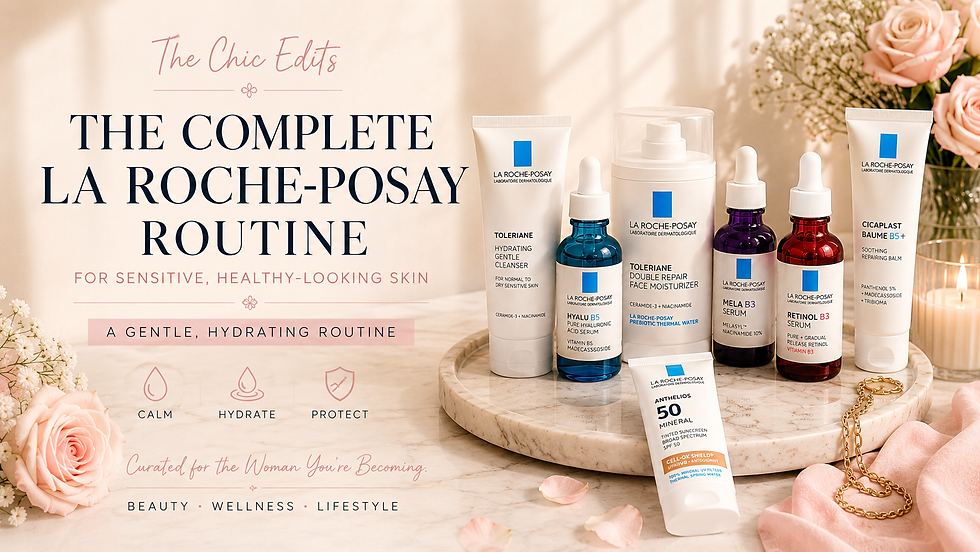
Sensitive skin does not need an overflowing shelf. It needs a calm, consistent routine built around gentle cleansing, dependable hydration, carefully introduced treatments, and daily sun protection.
La Roche-Posay is known for formulas developed with sensitive skin in mind, and several products in its Toleriane, Hyalu B5, Mela B3, Anthelios, Retinol B3, and Cicaplast ranges can be combined into a practical morning and evening routine. The goal is not to use every active ingredient every day. It is to give each product a clear purpose while protecting the skin barrier.
This guide explains the correct order, what each product is designed to do, and how to adjust the routine when your skin feels dry, reactive, or overwhelmed.
Affiliate disclosure: This post contains Mavely affiliate links. If you make a purchase through one of these links, The Chic Edits may earn a commission at no additional cost to you. Skin note: Patch-test new products and introduce one active at a time. If you have eczema, rosacea, persistent irritation, or another diagnosed skin condition, consult a dermatologist before changing your routine.
The Routine at a Glance
Morning
Toleriane Hydrating Gentle Facial Cleanser
Hyalu B5 Pure Hyaluronic Acid Serum
Vitamin C12 Serum
Toleriane Double Repair Face Moisturizer
Anthelios Mineral Tinted Sunscreen for Face
Evening
Toleriane Hydrating Gentle Facial Cleanser
Hyalu B5 Pure Hyaluronic Acid Serum
Mela B3 Dark Spot Serum or Retinol B3 Serum, depending on your goals and tolerance
Toleriane Double Repair Face Moisturizer
Cicaplast Balm B5+ as needed
Editor's Tip: Sensitive skin usually responds better when strong treatment steps are alternated rather than layered all at once.
Morning La Roche-Posay Routine for Sensitive Skin
Mornings should focus on maintaining hydration and protecting the skin from daily environmental exposure.
Step 1: Cleanse Gently
Toleriane Hydrating Gentle Facial Cleanser
This creamy cleanser is designed for normal-to-dry sensitive skin. It removes everyday buildup while helping maintain the skin's natural moisture barrier and pH. Key ingredients include ceramide-3, glycerin, niacinamide, and La Roche-Posay prebiotic thermal water.
Best for: Dry, normal, combination, sensitive, or easily tight-feeling skin.
How to use: Wet the face with lukewarm water, massage the cleanser over the skin using gentle circular motions, rinse, and pat dry.
Why it earns a place in the routine: A non-stripping cleanse creates a more comfortable foundation for serums, moisturizer, and sunscreen.
Step 2: Add Hydration
Hyalu B5 Pure Hyaluronic Acid Serum
Hyalu B5 is a hydrating serum formulated with hyaluronic acid and vitamin B5. It is intended to support a plumper, smoother, more hydrated appearance.
Best for: Dehydration, visible fine lines caused by dryness, or skin that feels less supple.
How to use: Apply a few drops after cleansing. Follow with moisturizer so the hydrating layer is sealed in.
Why it earns a place in the routine: Hydration can make sensitive skin feel more comfortable and can help support the barrier before treatment products are introduced.
Editor's Tip: Apply hydrating serum to lightly damp—not dripping wet—skin, then follow promptly with moisturizer.
Step 3: Brighten Carefully
Vitamin C12 Serum
Vitamin C12 Serum is designed to improve the look of dullness and uneven tone while providing antioxidant support. Because vitamin C can feel active on reactive skin, introduce it gradually.
Best for: Dull-looking skin, uneven tone, and early visible signs of environmental exposure.
How to use: Begin two or three mornings per week. Apply after Hyalu B5 and before moisturizer. Increase frequency only if your skin remains comfortable.
Why it earns a place in the routine: Vitamin C complements sunscreen by adding antioxidant support, but sunscreen remains the essential protection step.
Step 4: Support the Skin Barrier
Toleriane Double Repair Face Moisturizer
Toleriane Double Repair Face Moisturizer combines ceramide-3, niacinamide, glycerin, and prebiotic thermal water in a lightweight daily moisturizer.
Best for: Sensitive, normal, combination, or dry skin that needs hydration without a very heavy finish.
How to use: Smooth over the face and neck after serums.
Why it earns a place in the routine: Moisturizer reduces water loss and supports the barrier, which is especially important when using vitamin C, retinol, or dark-spot treatments.
Step 5: Finish With Daily SPF
Anthelios Mineral Tinted Sunscreen for Face
A mineral tinted sunscreen can provide broad-spectrum protection while helping reduce the visible white cast that some mineral formulas leave behind. The tint may also help visually even the complexion.
Best for: Sensitive skin and anyone who prefers a tinted mineral sunscreen.
How to use: Apply generously to the face, neck, and other exposed areas as the final morning step. Reapply according to the product directions, especially after sweating, swimming, toweling off, or spending extended time outdoors.
Why it earns a place in the routine: Daily sunscreen is essential when using retinol, vitamin C, or products targeting discoloration.
Evening La Roche-Posay Routine for Sensitive Skin
Evenings are the best time to remove sunscreen and makeup, restore hydration, and use targeted treatment products. Sensitive skin does not need every active every night.
Step 1: Cleanse
Use the Toleriane Hydrating Gentle Facial Cleanser to remove the day's buildup. If you wear heavier makeup or water-resistant sunscreen, remove it first with a gentle makeup remover, then follow with the cleanser.
Step 2: Replenish Hydration
Apply Hyalu B5 Pure Hyaluronic Acid Serum after cleansing. A hydrated base can make the rest of the routine feel more comfortable.
Step 3: Choose One Treatment Path
Rather than automatically layering multiple active serums, choose the treatment that matches your main concern.
Option A: Mela B3 Dark Spot Serum
Mela B3 Dark Spot Serum combines Melasyl and niacinamide and is designed to improve the appearance of dark spots and uneven tone.
Best for: Sun spots, post-blemish marks, and uneven-looking pigmentation.
How to use: Apply after cleansing and hydrating serum. Start every other evening or a few times per week, then adjust based on tolerance.
Why it earns a place in the routine: It gives the routine a focused discoloration step without requiring a separate exfoliating acid.
Option B: Retinol B3 Pure Retinol Serum
Retinol B3 Serum is formulated with retinol and niacinamide to target the appearance of fine lines, uneven texture, and uneven tone.
Best for: Retinol beginners, visible texture, fine lines, or anyone seeking a gradual anti-aging step.
How to use: Apply a pea-sized amount to completely dry skin at night, avoiding the eyelids and corners of the nose and mouth. Begin one or two nights per week, then increase slowly if tolerated.
Why it earns a place in the routine: Retinol is a well-established skincare ingredient, but sensitive skin benefits from a conservative schedule.
Editor's Tip: On retinol nights, keep the rest of the routine simple. Cleanser, hydration, retinol, and moisturizer are enough.
Step 4: Moisturize
Follow the selected treatment with Toleriane Double Repair Face Moisturizer. On nights when the skin feels dry, apply a slightly more generous layer.
Step 5: Add Cicaplast Balm When Needed
Cicaplast Balm B5+
Cicaplast Balm B5+ is a rich, multipurpose balm formulated with panthenol, shea butter, and madecassoside. It can be used over moisturizer on dry or visibly irritated areas.
Best for: Dry patches, a compromised-feeling barrier, or areas that need a more protective final layer.
How to use: Apply a thin layer after moisturizer, focusing on areas that feel dry or uncomfortable. It does not have to be used every night.
Why it earns a place in the routine: It gives sensitive skin an optional recovery step without requiring another treatment serum.
How to Introduce the Routine Without Overwhelming Sensitive Skin
A complete routine does not need to begin all at once. A slower rollout makes it easier to identify which product is helping—or causing irritation.
Week 1
Use only:
Toleriane Hydrating Gentle Facial Cleanser
Toleriane Double Repair Face Moisturizer
Anthelios sunscreen in the morning
Week 2
Add:
Hyalu B5 Serum once daily
Week 3
Choose one:
Vitamin C12 in the morning a few times per week
Mela B3 in the evening a few times per week
Retinol B3 one or two evenings per week
Wait until the skin is comfortable before adding another active.
Which Products Should You Buy First?
You do not need all eight products to begin.
Best three-product starter routine
Toleriane Hydrating Gentle Facial Cleanser
Toleriane Double Repair Face Moisturizer
Anthelios Mineral Tinted Sunscreen
Best addition for dehydration
Hyalu B5 Pure Hyaluronic Acid Serum
Best addition for dark spots
Mela B3 Dark Spot Serum
Best addition for fine lines and texture
Retinol B3 Serum
Best optional recovery product
Cicaplast Balm B5+
This approach keeps the routine focused and makes it easier to purchase according to your most important concern.
Frequently Asked Questions
Can sensitive skin use vitamin C?
Many people with sensitive skin can use vitamin C, but tolerance varies. Begin with a limited schedule, patch-test first, and stop if persistent burning, swelling, or irritation develops.
Can I use vitamin C and retinol in the same routine?
Using vitamin C in the morning and retinol at night is a simple way to reduce the chance of irritation. Some experienced users tolerate both, but sensitive skin rarely benefits from an unnecessarily complicated schedule.
Can I use Mela B3 and Retinol B3 together?
The products may be used within the same overall regimen, but sensitive skin may tolerate them better on alternating nights. Introduce them separately so you can judge your response to each one.
Is hyaluronic acid suitable for everyday use?
Hyaluronic acid is generally used daily, morning and evening. Follow it with moisturizer, particularly in dry environments.
What order should I apply La Roche-Posay products?
A simple rule is:
Cleanser
Hydrating serum
Treatment serum
Moisturizer
Sunscreen in the morning
How quickly should I expect results?
Hydration and comfort may be noticeable sooner than changes in discoloration, texture, or fine lines. Treatment products typically require consistent use over time. Avoid promising yourself an exact deadline, because results vary with skin type, product use, sun exposure, and individual tolerance.
Shop the Complete La Roche-Posay Routine
A closer look at every product in this routine, with our honest take on why it earns a place on your shelf.
Toleriane Hydrating Gentle Facial Cleanser
Our first step every morning and night — gentle enough for the most reactive skin types.
Hyalu B5 Pure Hyaluronic Acid Serum
The hydration boost we reach for when skin feels tight, dull, or dehydrated.
Vitamin C12 Serum
A gentle way to brighten and add antioxidant protection without overwhelming sensitive skin.
Toleriane Double Repair Face Moisturizer
Our go-to for barrier support — lightweight, but it never leaves skin feeling stripped.
Anthelios Mineral Tinted Sunscreen for Face
The sunscreen we never skip — mineral protection with a wearable, no-white-cast finish.
Mela B3 Dark Spot Serum
For anyone working on stubborn discoloration, this is the targeted step worth adding.
Retinol B3 Pure Retinol Serum
A gentle entry point into retinol for skin that is easily irritated.
Cicaplast Balm B5+
The rescue balm for dry patches, wind-chapped skin, or nights when your barrier needs extra care.
Final Thoughts
The best La Roche-Posay routine for sensitive skin is not necessarily the longest one. Start with cleanser, moisturizer, and sunscreen. Add hydration if needed, then choose one active treatment based on your primary concern.
A routine that your skin can tolerate consistently is more valuable than an ambitious routine you cannot maintain. Introduce products slowly, protect your skin from the sun every day, and adjust when your skin asks for less.
─────────────────────────────
Comments